I’ve sat across from a lot of founders. And there’s a specific kind of frustration that shows up in almost every first conversation.
The website is clean. The logo is sharp. The Instagram feed is curated within an inch of its life. The brand deck looks like it was made by a senior agency team. And yet nothing is really moving. Inquiries are thin. Conversions are inconsistent. Referrals aren’t happening the way they should be.
The founder usually says some version of the same thing:
“I don’t understand. The brand looks great. Why isn’t it working?”
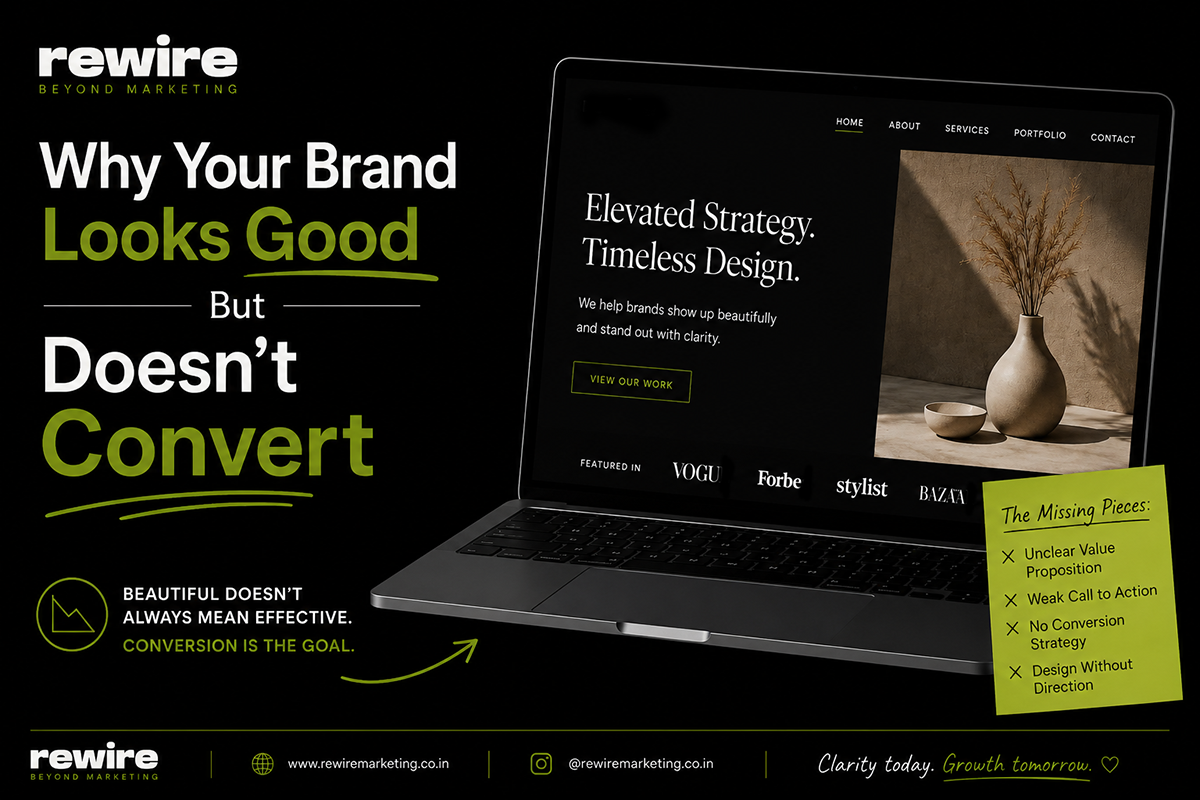
Here’s what I’ve come to believe after 14 years of working on brands and what most marketing advice will never tell you. Looking great is not the same as feeling like something.
Looking Good Is Not the Same as Being Felt.
We live in a time when a founder with a Canva subscription, a decent brief, and a good eye can produce a brand that looks entirely legitimate. Clean typography. Cohesive colours. Professional photography. A tone of voice document that uses words like “bold” and “authentic” and “human.” And none of it, none of it guarantees that anyone will feel anything when they encounter it. Because looking good is an aesthetic achievement. Feeling like something is an emotional one. And those are two completely different problems.
A brand that looks good gets noticed. A brand that feels like something gets remembered, talked about, and chosen repeatedly, often without the customer being entirely sure why.
The gap between those two things is where most Indian D2C brands are stuck right now. They’ve solved the visual problem. They haven’t touched the emotional one.
The Real Reason Founders Confuse Design With Brand Strategy.
This is not a criticism of founders. It’s a criticism of the industry that serves them.
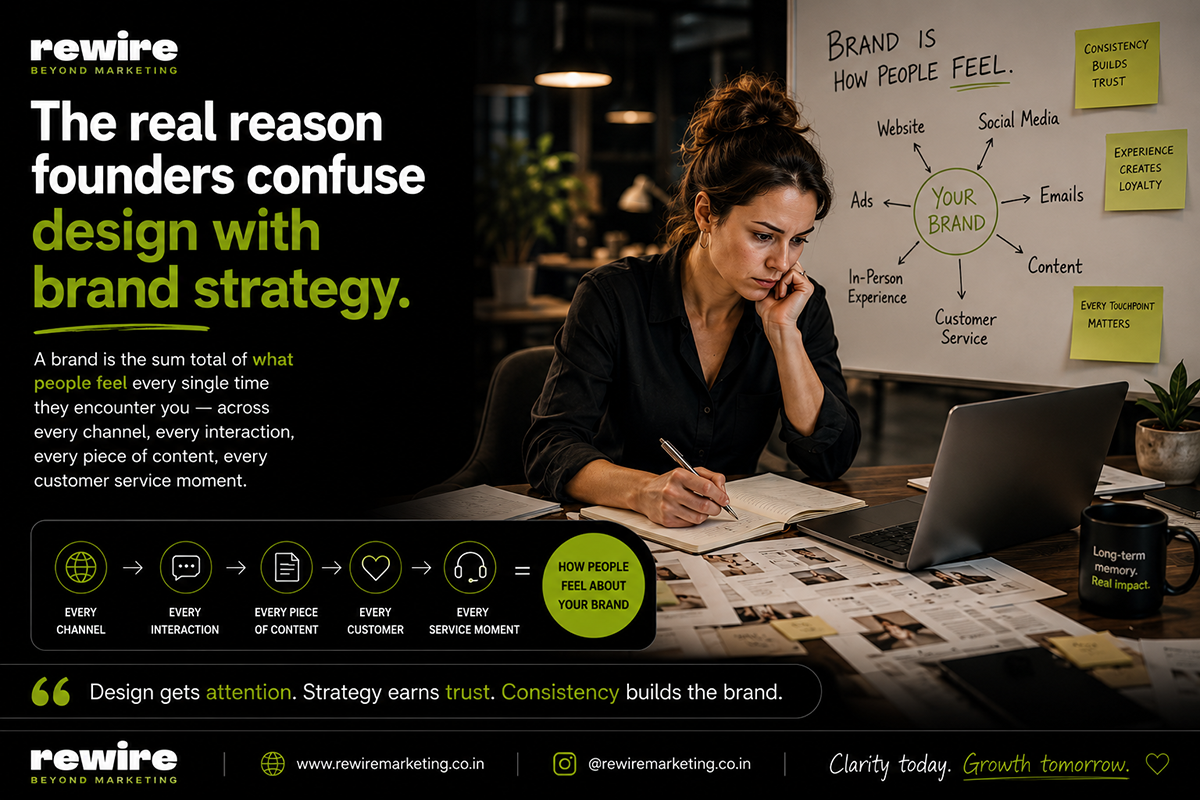
Most branding conversations especially at the early-stage level are design conversations dressed up in strategy language. Agencies talk about brand guidelines. They deliver logo systems and colour palettes and font hierarchies. They hand over a PDF and call it a brand. And founders, reasonably, assume that if the PDF looks good, the brand is done. But a brand is not a PDF. A brand is not even a visual identity.
A brand is the sum total of what people feel every single time they encounter your brand across every channel, every interaction, every piece of content, every customer service moment.
The logo is one input into that feeling. It is not the feeling itself. When founders confuse the two, they spend their budgets solving the wrong problem. They invest in better photography when what they need is a clearer point of view. They refresh the website when what they need is a more honest customer conversation. They hire a content agency when what they need is to figure out what their brand actually believes. The design gets better. The feeling stays flat. The conversions don’t come.
What a Brand That Converts Actually Does Differently.
I want to be specific here, because this gets vague very quickly. Brands that convert consistently, at healthy margins, with customers who come back and bring others do one thing that struggling brands don’t.
They make their audience feel something specific before asking them to do anything. Not something generic. Not “trust” or “quality” or “reliability.” Those are table stakes in any category. Something specific to them, to who they’re for, and to what they believe.
Think about boAt.
They’re not the best audio brand in the world by any technical measure.
But they made an entire generation of young Indians feel like owning a boAt product was a signal about who you are, what you value, what tribe you belong to. That feeling is why boAt scaled the way it did.
Not the specification. Not the price point. But The feeling.
Now think about the last Indian D2C brands you encountered that made you feel something that specific.
Something that made you think,
“This brand gets people like me.”
Harder to come up with, isn’t it? That’s the gap. And it’s not a design gap.
It’s an emotional strategy gap.
The Gap Between Visibility and Connection.
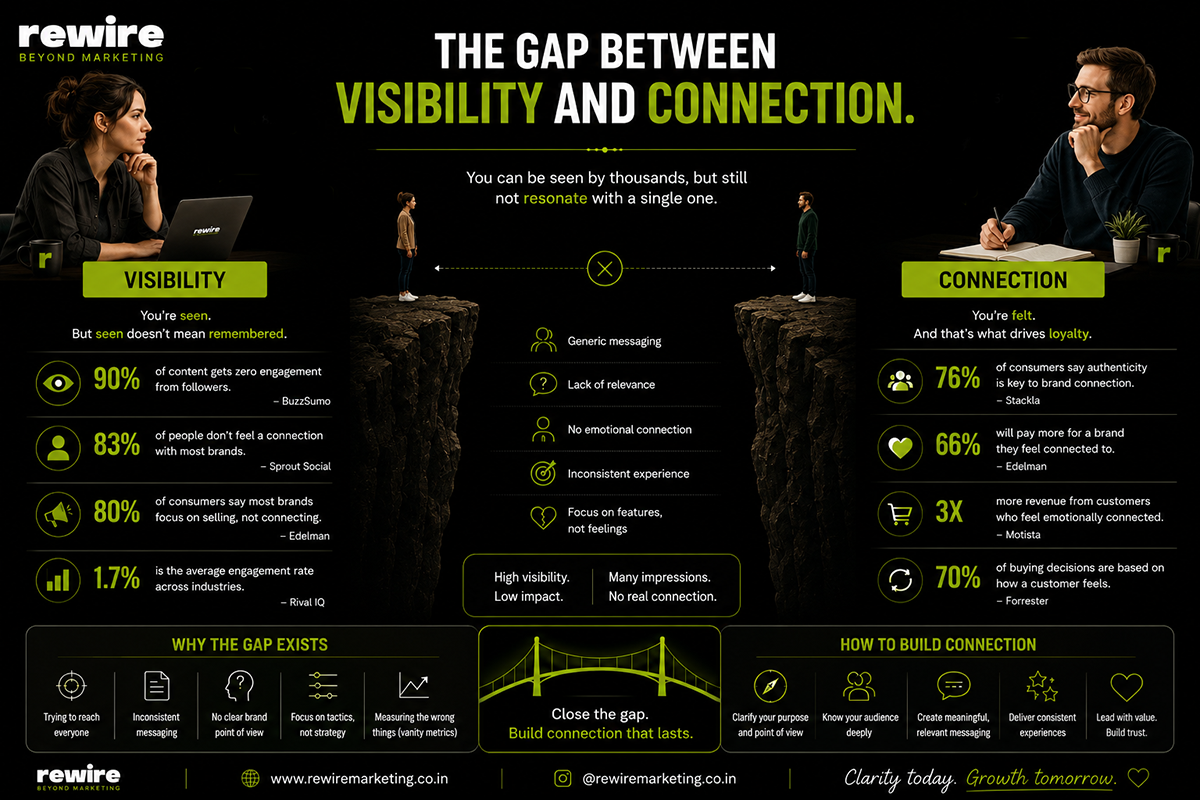
Here’s something that’s become clearer to me the more brands I work on. Visibility and connection are not the same currency. But most marketing treats them as if they are. Visibility is about reach. How many people saw the ad. How many followed the page. How many opened the email. These are real numbers and they matter but they measure exposure, not impact.
Connection is about what happened after the exposure. Did the person feel something? Did they think about your brand when you weren’t in front of them? Did they tell someone? Did they come back without being retargeted?
Most Indian D2C brands are optimising for visibility.
They’re measuring reach and impressions and follower counts. And those numbers go up. And the conversion doesn’t follow. Because you can be visible to a million people and connect with none of them.
The brands that scale really scale, with retention and referral and genuine loyalty are the ones that chose connection over visibility early. They reached fewer people and made each encounter mean something. That is a strategic choice. It doesn’t happen by accident. And it almost never comes from a better-looking brand. It comes from a brand with a clearer feeling.
Three Signs Your Brand Has a Feeling Problem, Not a Design Problem.
Before you brief an agency, before you refresh the visual identity, before you spend another rupee on ads check for these three things.
Sign 1 — People say your brand “looks professional” but nothing more specific. Professional is not a feeling. It’s a floor. If the best description you’re getting from customers is “professional” or “clean” or “nice” your brand isn’t making anyone feel anything memorable. It’s just not offending anyone.
Sign 2 — Your best customers can’t explain why they chose you. This sounds like a good problem. It isn’t. If your own best customers struggle to articulate what’s different about you they can’t refer you. And if they can’t refer you, your brand is working harder than it should just to stay visible.
Sign 3 — You could swap your brand messaging with a competitor and no one would notice. This is the most uncomfortable test. Take your website headline, your Instagram bio, your brand tagline. Replace your brand name with a competitor’s name. Does it still make sense? If yes you don’t have a brand position. You have a category description.
These are not design problems. No rebrand will fix them. They’re feeling problems. And they require a different kind of thinking to solve.
What to Do Next. The Rewire Diagnosis.
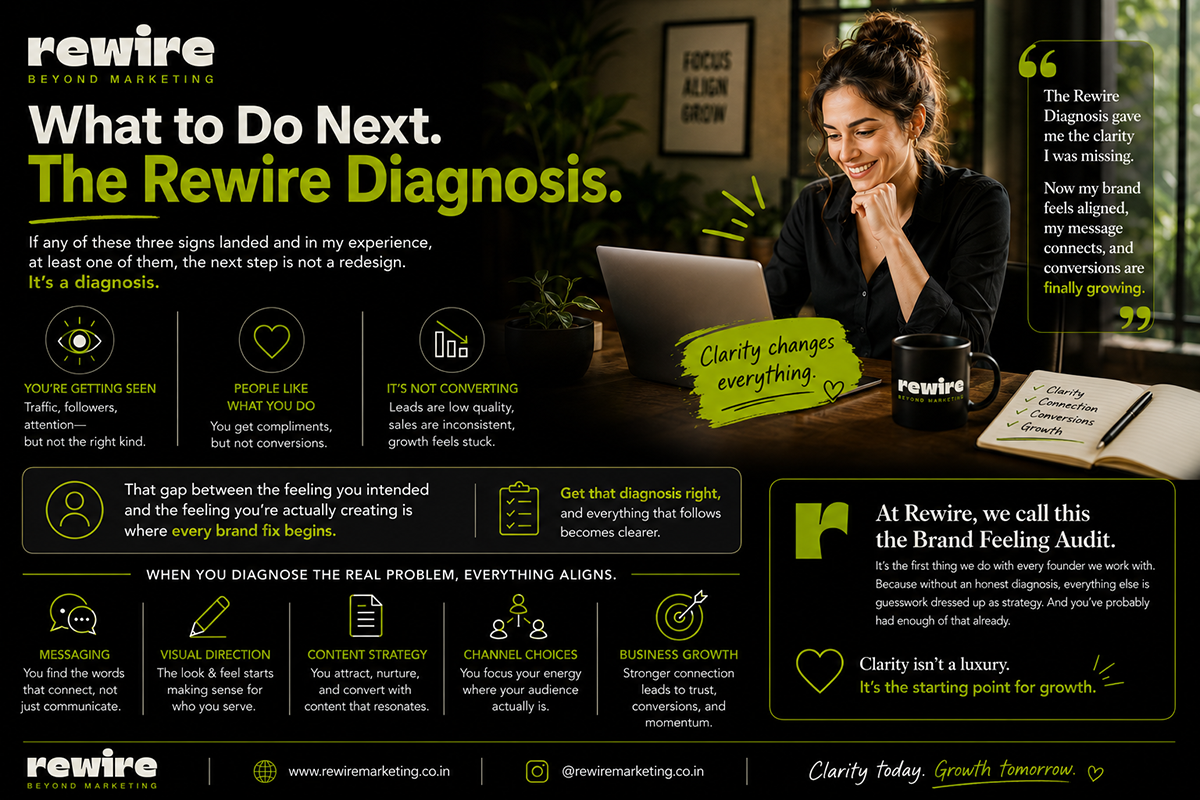
If any of those three signs landed and in my experience, at least one of them always does the next step is not a redesign. It’s a diagnosis.
You need to understand what your brand is currently making people feel. Not what you intended it to feel. What it actually feels like from the outside. That gap between the feeling you intended and the feeling you’re actually creating is where every brand fix begins.
Get that diagnosis right and everything that follows becomes clearer.
The messaging, the visual direction, the content strategy, the channel choices all of it aligns more naturally when you know exactly what feeling you’re building toward.
At Rewire, we call this the Brand Feeling Audit. It’s the first thing we do with every founder we work with. Not because we want to start with a process but because without an honest diagnosis, everything else is guesswork dressed up as strategy. And you’ve probably had enough of that already.
The Only Question That Actually Matters.
I want to leave you with something that I think is worth sitting with. Not a framework. Not a checklist. Just a question.
When someone encounters your brand for the very first time what do they feel?
Not what do they think. Not what do they understand. What do they feel. If you can answer that question with clarity and confidence your brand is in better shape than most.
If you hesitate, or give a general answer, or find yourself explaining what your brand does instead of what it feels like you’ve just found your real problem. Everything else is a symptom of that.
Your Brand Might Look Right.
Let’s find out if it feels right.
Book a free Brand Feeling Audit with Rewire. No pitch. No pressure. Just a clean diagnosis of what your brand is currently making people feel.