There's a conversation I've had more times than I can count.
A founder comes in frustrated. They've been running ads. Posting consistently. Working with a content agency. The numbers look okay on paper impressions, reach, some engagement. But the business isn't growing the way it should. Customers aren't returning. Referrals aren't happening. The brand feels like it's running on a treadmill a lot of effort, not much distance. And when I ask them what they think the problem is, they almost always say the same thing.
"We need better marketing." Sometimes that's true. But more often much more often the problem isn't the marketing at all.
“The problem is that there's no brand underneath it.”
Why This Confusion Is Costing Indian Founders Real Money.
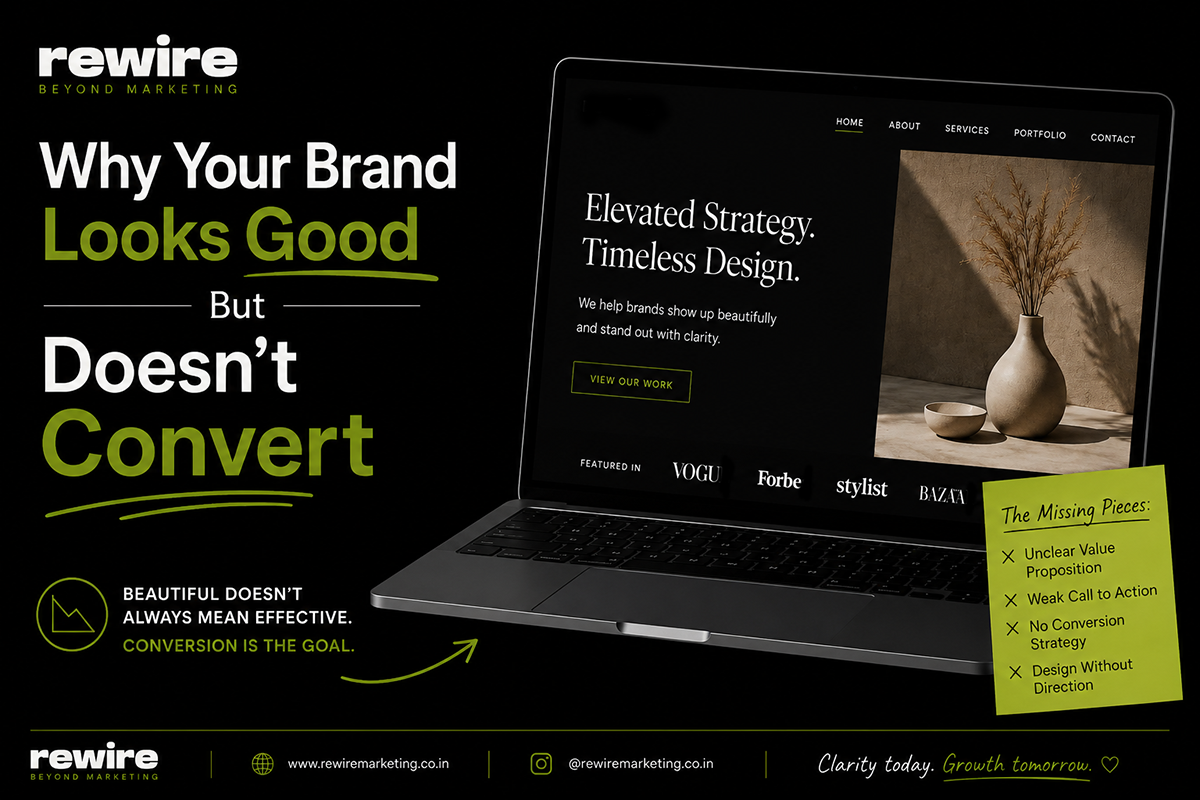
Marketing and branding get used interchangeably in almost every founder conversation I've been part of. On startup calls. In agency briefs. In investor decks. Everywhere. And that confusion that single linguistic habit is responsible for a staggering amount of wasted money across the Indian startup ecosystem.
Here's why.
When you believe marketing and branding are the same thing, you treat every growth problem as a marketing problem. Conversions are low run more ads. Retention is weak post more content. Word of mouth isn't happening increase the budget. You pour more into the top of the funnel because that's where marketing lives. And the results stay thin because the problem was never at the top of the funnel. The problem was the foundation. And no amount of marketing spend fixes a foundation problem.
What Marketing Actually Is and What It Isn't?
Marketing is everything you do to get your brand in front of the right people at the right time. Ads. Content. SEO. Email campaigns. Influencer partnerships. Performance spend. These are all marketing. They're mechanisms of reach and visibility. They work by putting your message in front of an audience and asking them to do something like click, buy, follow, subscribe.
Marketing is fundamentally transactional in its logic. Not in a cynical way. Just in a mechanical way. It says: here is what we have, here is why you should want it, here is what to do next. Done well, marketing is enormously powerful. The best campaigns in Indian advertising history Amul's topical ads, Zomato's irreverent social media, Fevicol's legendary television work are all masterclasses in marketing execution. But here's what every one of those examples has in common. They were all built on top of a brand that already knew exactly what it stood for. The marketing was brilliant. But the brand came first.
What Branding Actually Is and Why It Comes First?
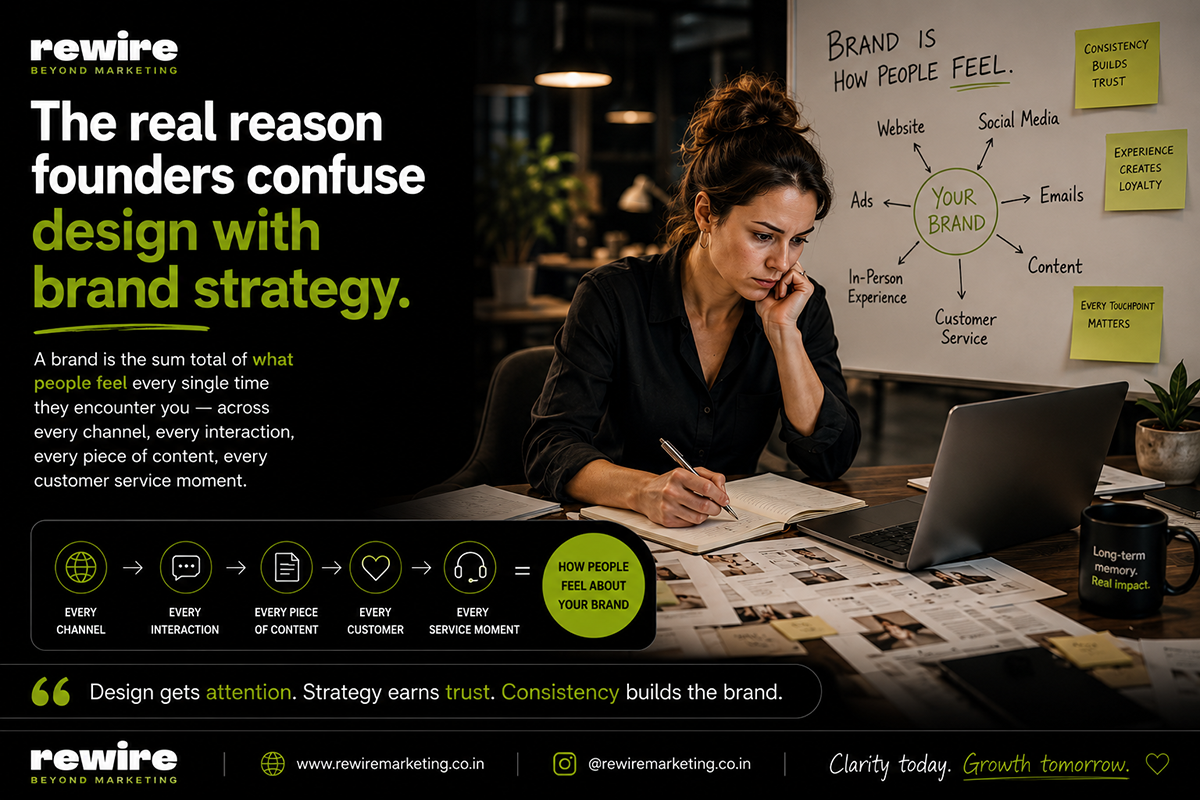
Branding is not just about logo, colour palette, tone of voice or brand guidelines. Branding is the sum of what people feel every single time they encounter you. Not what they think. Not what they understand. What they feel.
It's the emotional residue your brand leaves behind after every interaction a purchase, a piece of content, a customer service call, a packaging unboxing, an offhand comment from your founder on LinkedIn. All of it adds up to a feeling. And that feeling whether you've deliberately designed it or not is your brand.
The difference between a brand you've built intentionally and one that just happened to you is the difference between a brand that compounds and one that constantly needs to be pushed. An intentional brand creates a feeling so specific and consistent that marketing becomes easier. The ads land harder. The content resonates faster. The word of mouth happens without being engineered. That's why branding comes first. Not because of some strategic principle. Because of a simple practical reality marketing is the amplifier, and branding is the signal. Amplify a weak signal and you get noise. Amplify a strong one and you get growth.
The Founder Who Markets Without a Brand A Pattern I See Constantly.
Let me describe a pattern that will probably feel familiar. A founder launches with a strong product. Early customers are happy. There's some organic word of mouth. The founder starts investing in marketing content, ads, maybe a PR push. Growth comes. But it's inconsistent. Some months are strong. Others are inexplicably flat. The cost of acquiring each customer keeps creeping up.
They make their audience feel something specific before asking them to do anything. Not something generic. Not “trust” or “quality” or “reliability.” Those are table stakes in any category. Something specific to them, to who they’re for, and to what they believe. The founder responds by doing more marketing. Better targeting. More creative variants. A new platform. A bigger budget. And the results stay inconsistent.
What's happening here is not a marketing failure. It's a branding vacuum.
Without a clear, felt brand underneath the marketing every campaign has to work from scratch. There's no accumulated emotional equity pulling people toward you. No feeling that makes someone choose you without needing to be convinced. No identity that makes your existing customers want to tell others. Each marketing push works in isolation and then fades. Because there's nothing holding it together. This is the most expensive way to build a business. And it's entirely avoidable.
How to Know Which One You Actually Need Right Now?
This is the question that matters most practically. So let me give you a direct answer.
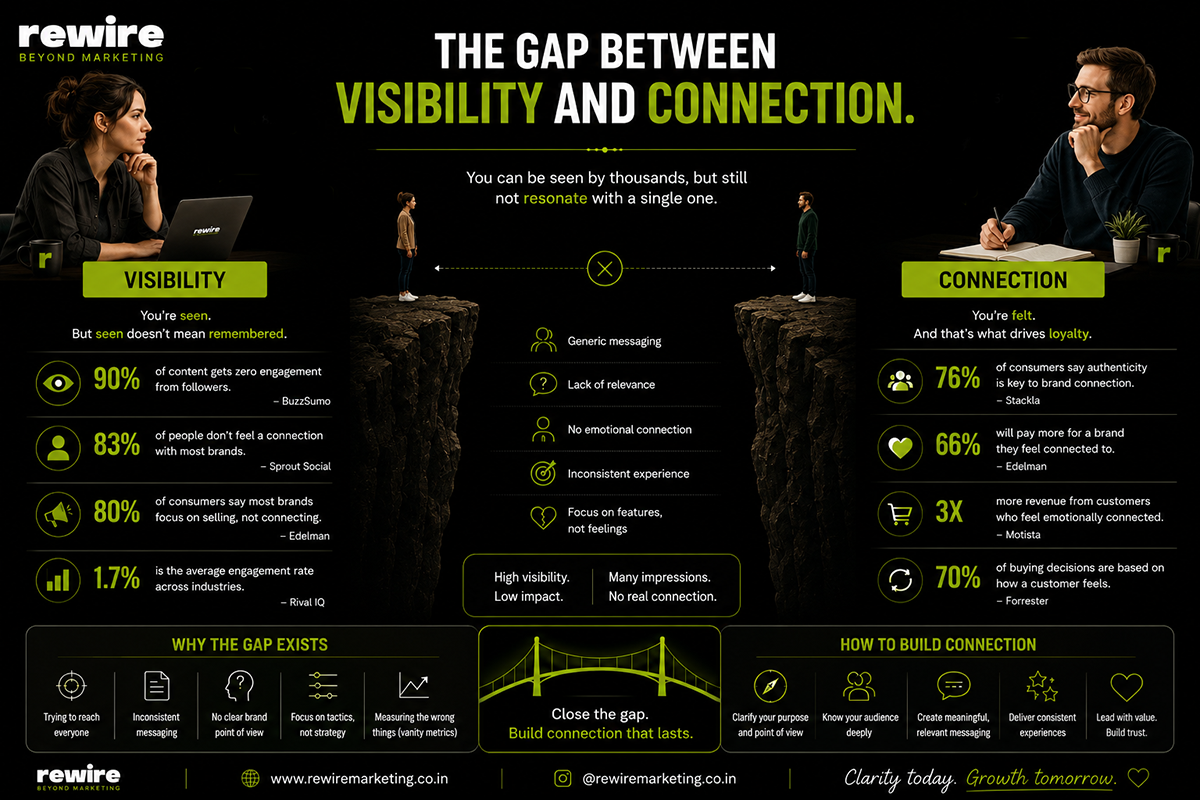
You need branding work if: Your marketing is reaching people but not converting them at the rate it should. Your best customers struggle to explain why they chose you. Your brand messaging could be swapped with a competitor's and no one would notice. You've refreshed your visual identity more than once in three years and it hasn't moved the needle. You're spending more on acquisition every quarter just to maintain the same revenue. These are all brand symptoms showing up as marketing problems.
You need marketing work if: Your brand has a clear, felt identity that your existing customers can articulate specifically. Your retention and referral rates are strong. The problem is genuinely reach not enough people know you exist. Your conversion rate from warm leads is healthy but you don't have enough of them. If your brand is strong and your marketing is weak more marketing fixes the problem. If your brand is weak and your marketing is strong more marketing makes the problem more expensive.
The honest test: Ask your five best customers people who love what you do and keep coming back to describe your brand in their own words. Don't prompt them. Just listen. If their answers are specific, consistent, and emotionally charged you have a brand. Go build your marketing. If their answers are vague, generic, or inconsistent with each other fix the brand first. Everything else is premature.
The Rewire Position. Strategy Before Spend.
At Rewire, we have a principle we come back to with every founder we work with.
Strategy before spend. Not because spending is wrong. Not because marketing doesn't matter. But because spending without strategy is the most reliable way to waste money in the early stages of building a brand. We've seen founders spend lakhs on performance marketing for a brand that hadn't yet decided what it wanted people to feel. The ads got impressions. The conversions were disappointing. The founder assumed the creative was the problem and briefed new ads. The creative was never the problem. The brand was.
Marketing is what you say. Branding is what they feel after you've stopped talking. One fills the pipeline. The other fills the room before you even enter it. Get the brand right the feeling, the truth, the consistency and marketing becomes a multiplier instead of a lifeline. That's the difference. And it's worth understanding before you spend another rupee.
One Question Worth Sitting With.
Before you brief your next campaign, run your next ad, or hire your next content agency ask yourself this. If your brand stopped all marketing activity tomorrow no ads, no content, no social posts what would your existing customers feel?
Would they notice something was missing? Would they talk about you anyway? Would they come back without being prompted? If yes you have a brand. If you're not sure that uncertainty is the answer.
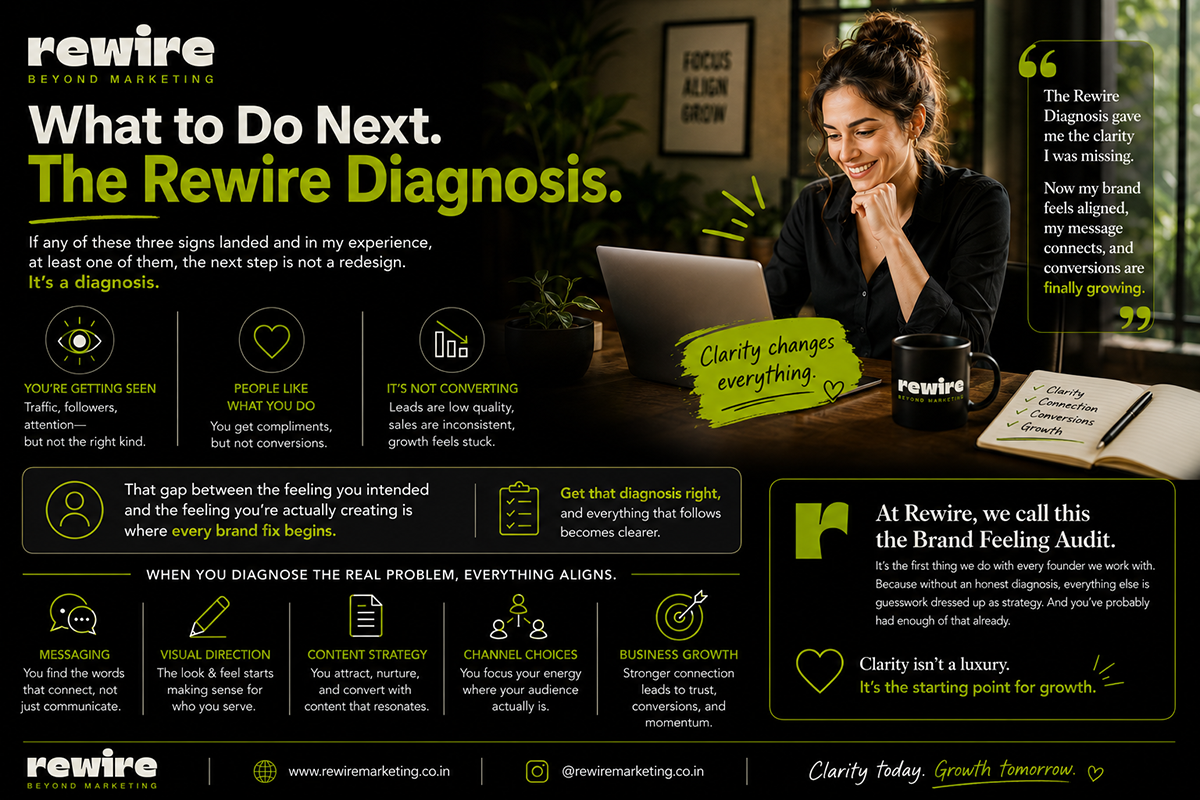
Get that diagnosis right and everything that follows becomes clearer.
Start With the Foundation If this piece made you question whether you've been solving the right problem good. That's the most useful thing any piece of brand thinking can do. The next step is understanding exactly where your brand stands right now. Not where you think it stands. Where it actually stands from the outside, from your customer's perspective. That's what a brand audit is for. And it starts with a single honest conversation.
Book your free brand audit with Rewire. →
Your Brand Might Look Right.
Let’s find out if it feels right.